We remember and worry about jobs-to-be-done or activities that we haven’t finished, and these continue to bug us until completed.


In the noisy world of fundraising, curiosity is your secret weapon.
When something feels incomplete, hidden, or just plain surprising, people are wired to want more. This phenomenon — explained by Loewenstein’s Information Gap Theory — tells us that when we notice a gap in our knowledge, our brains itch to close it.
In fundraising, that itch can lead to more:
So how do you spark curiosity without crossing into clickbait territory?
A classic storytelling trick: hint at something just out of view.
“Most people have no idea what really happens backstage…”
Use this in subject lines, social media, or the opening lines of an appeal to pull people in.
Make the reader pause and think.
“What’s the one thing keeping vulnerable families from getting support?”
This kind of rhetorical question sets up a problem they’re eager to solve with your help.
According to the Zeigarnik Effect, we remember incomplete stories better than finished ones.
“We’ve helped Sophie come this far but her story isn’t over…”
Leaving things unresolved invites your audience to imagine what comes next and how they can be part of it.
Uncover the parts of your work that are surprising, specific or unsung.
“You’ve probably never heard of a bereavement midwife, but they’re changing lives.”
Curiosity is strongest when something feels new and emotionally resonant.
Curiosity loves novelty, especially when it’s concrete and emotional.
“A theatre seat lasts 40 years. Yours could host 1,200 standing ovations.”
Stats are great, but surprising stats are better.
Subject line: What’s behind the green velvet curtain?
Email copy:
“Most people see the stage. But few see the 140-year-old machinery beneath it that lifts every moment into place…
Right now, that magic is at risk—and you can help save it.”
It’s a curiosity hook with emotional weight—and it leads directly to the ask.
To spark curiosity, try phrases like:
But be kind to your readers: curiosity works best when paired with clarity. Make sure you deliver on your tease.
The Vagina Museum‘s campaigns, particularly those around staying open or securing funding, are brilliant examples of using curiosity as a behavioural science lever.
Here’s how they tap into curiosity effectively:
The very name Vagina Museum sparks curiosity — it challenges taboos and cultural norms. People think:
“Wait, that exists?”; “What’s in there?”; “Why do we need one?”
That moment of surprise or mild discomfort opens a curiosity loop. People want to resolve the unknown.
Their campaign messaging is cheeky, clever, and unexpected:
This kind of language activates the Information Gap Theory — coined by George Loewenstein — where curiosity arises when there’s a gap between what we know and what we want to know. Humour and innuendo increase emotional salience and memorability.
They provoke deeper questions:
This reframes curiosity into moral curiosity. People want to learn and be part of something important and underrepresented.
In their appeals, they often say things like:
These create open loops — an unresolved narrative that people want to see completed. It invites supporters to be part of the “ending” by donating.
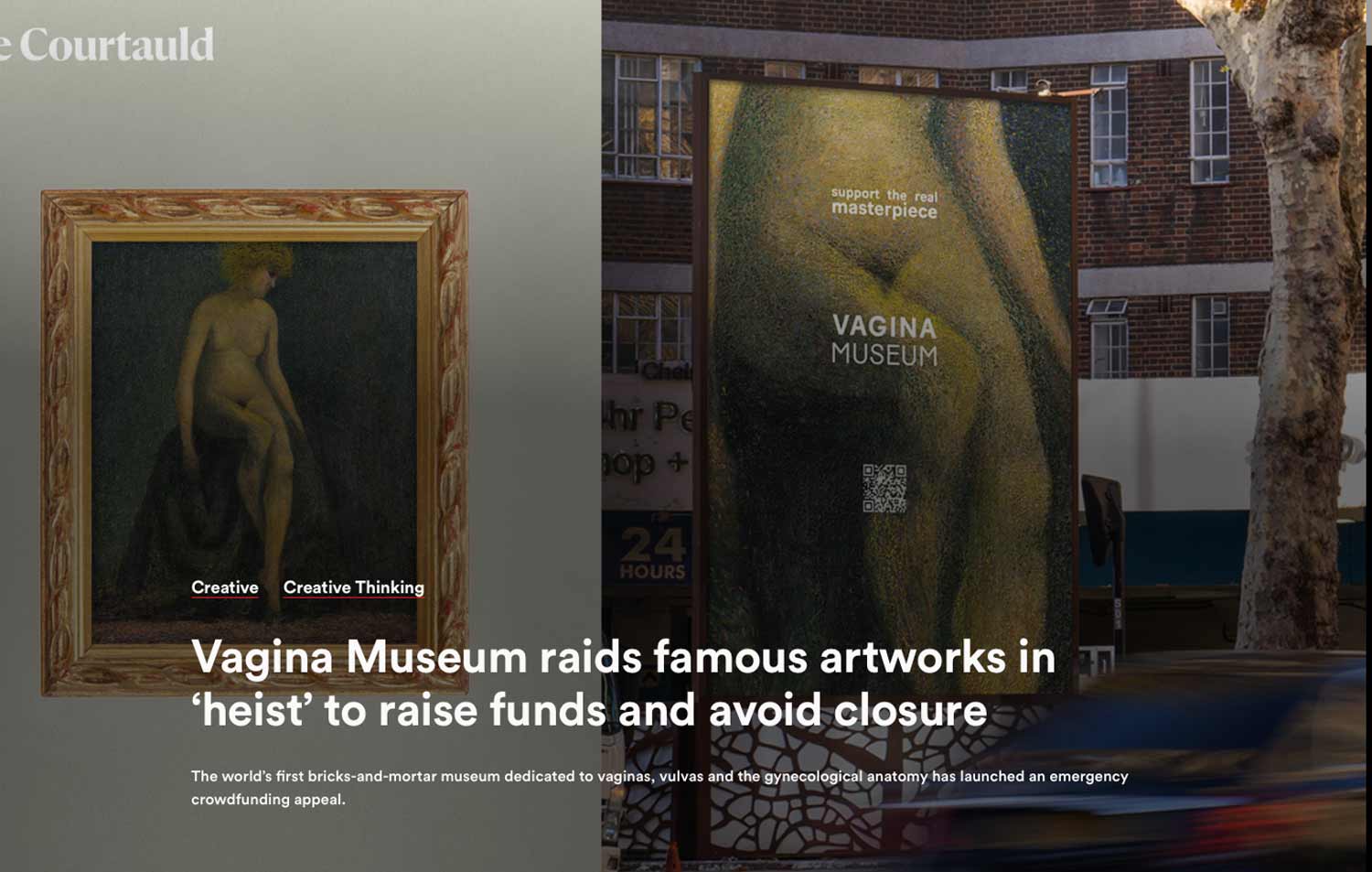
They often use bold, graphic illustrations — vulvas as flowers, anatomical drawings, or tongue-in-cheek merch — that raise questions rather than answer them. Visual ambiguity adds to the intrigue. Their recent campaign showing vaginas in ‘traditional’ art is designed to do this.
See image below and read more here.
The RNLI use a deceptively simple but strange phrase in their campaign materials:
This disrupts expectations as most people assume swimming is how you save yourself. That jolt of counterintuitive information opens a curiosity loop:
“Wait, what do you mean? Why wouldn’t I swim?”
They use surprising incongruity. It drives people to read or watch more to resolve the contradiction.
When people click, they get a dramatic short film or animation showing how floating (not panicking or thrashing) is the safer survival method. It’s deeply memorable,and because they earned your attention, the RNLI can then pivot to:
“We save lives like this every day. You can help us do more.”
Now the emotional door is open, and they can ask for support.