Our choices are influenced by conscious or unconscious memories of stimuli we’ve recently experienced. These can be sounds, smells, or sights.


For Muslims around the world Zakat is more than just charity, it’s a spiritual duty and one of the Five Pillars of Islam. It literally means “purification” or “growth” and it’s based on the belief that wealth is a blessing from God and it’s meant to be shared.
Zakat is a required form of giving. Every eligible Muslim gives 2.5% of their qualifying wealth each year to support those in need. It’s not optional — it’s an obligation, much like prayer or fasting.
Zakat creates a powerful, built-in culture of giving. Muslims often look for trusted Islamic charities to help them fulfill their Zakat correctly. These charities act as stewards, ensuring donations go to eligible recipients in a way that honours Islamic teachings.
That’s why you’ll see many Muslim-led charities ramp up their efforts during Ramadan, when Zakat giving peaks. It’s a time of reflection, generosity, and reward — a perfect moment to connect faith with action.
Zakat isn’t just a financial transfer, it’s a spiritual investment. It purifies the giver’s wealth, strengthens community bonds, and upholds the Islamic principle of social justice. Charities that frame Zakat in this way don’t just raise funds, they help believers fulfill a core part of their faith.
Would you like to add examples from UK-based Islamic charities or explore how behavioural nudges can enhance Zakat appeals?
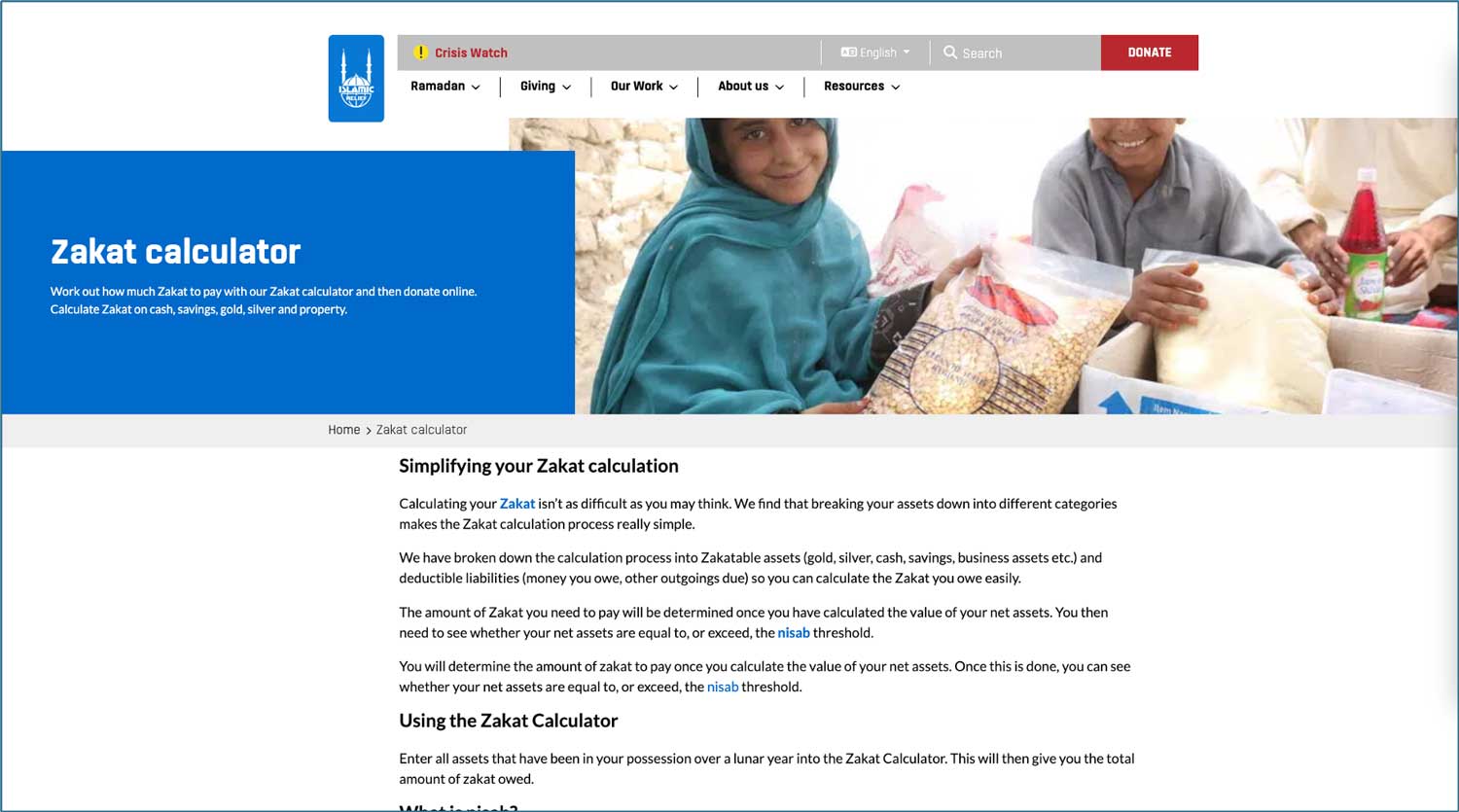
Islamic Relief UK is one of the largest and most trusted Islamic charities in the UK. During Ramadan, their Zakat appeals are everywhere: online, in mosques or on TV. They reduce friction with tools which allow you to calculate by default the amount you should give. This boosts motivation and provides a ready answer to the question- how much should I give?
Solar Aid is a fantastic charity working to provide low cost environmentally friendly solar lighting to families in Africa. Rather like Water Aid they have a simple proposition and that is what the provision of light — much like Water Aid’s water — can make a transformational difference to a family educationally, socially and economically.
Like the Zakat calculator above they begin by assuming that people don’t know how much to give so they adopt a different approach. You enter an amount of money and you see the impact you have. This encourages donors to make a larger donation to see how much impact they can have.
You can see the calculator in action here.